August
is a month that brings back countless memories for me. It is the month
in which my mother was born. My brother Kamal, who was only two years
younger than I, was also born in August—on the 5th. Yet, by one of
fate's cruellest ironies, it was in this very month, on 15 August, that
my mother was struck down by the assassins' bullets and gave her life.
On
that tragic day, my father—the Father of the Nation, Bangabandhu Sheikh
Mujibur Rahman—was murdered alongside my mother, Begum Sheikh
Fazilatunnesa Mujib, my brothers Sheikh Kamal, Sheikh Jamal, and little
Sheikh Russell, Kamal and Jamal's newly married wives, Sultana Kamal
Rosy and Rosy Jamal, my only paternal uncle Sheikh Abu Naser, my
paternal uncle Abdur Rab Serniabat, his thirteen-year-old daughter Baby,
his ten-year-old son Arif, his four-year-old grandson Sukanta, and
Sukanta's mother. My father's Military Secretary, Colonel Jamil, who
rushed to rescue him, was also killed. On that same day, Sheikh Fazlul
Haque Moni and his pregnant wife Arzu Moni were murdered. Altogether,
nearly eighteen members of our extended family and those faithfully
serving them lost their lives. Why did this massacre take place? There
was only one reason: my father had led Bangladesh to independence.
Responding to his call, millions of ordinary men and women took up arms
during our Liberation War. I pay my deepest respect to all those who
laid down their lives in that glorious struggle.
History
is filled with stories that often go untold. Whenever I remember my
mother, I think of the immense sacrifices that made our freedom
possible. Bangladesh became an independent nation because my father
devoted his entire life to that cause. Yet behind his struggle stood my
mother, my grandparents, and many others who quietly supported him every
step of the way.
My mother herself knew
hardship from childhood. Her father died when she was only three years
old. My grandfather was a cultured and forward-thinking man who worked
in Jessore. At a time when educating girls was almost unheard of,
especially in a remote village like Tungipara, he dreamed of seeing both
of his daughters earn university degrees. In those days, travelling
from Dhaka to Tungipara took almost an entire day, and girls attending
school was considered unacceptable. My mother was fortunate to receive
some elementary education at a missionary school. But before long, she
had to stop. There were virtually no schools nearby, and social customs
simply did not allow girls to travel to one. The only school in the area
was the Gimadanga-Tungipara School, founded by our own ancestors. It
was nearly a mile from home, accessible only by muddy village roads or
by boat. Neither option was considered suitable for girls. Instead,
tutors were brought to the house. She studied Bengali, Arabic, and other
subjects privately. Yet her eagerness to learn never diminished. When
her father died, inheritance laws prevented grandchildren from
inheriting property if their own father had died before the grandfather.
To protect his granddaughters, my mother's grandfather arranged for
both girls to be married into the family at a young age and legally
transferred his property to them, appointing my grandfather as its
trustee. Not long afterwards, her grandmother also passed away. From
then on, my mother was raised by my paternal grandmother. Since both
families lived within the same ancestral homestead, she grew up
surrounded by her future in-laws—her parents-in-law, brothers-in-law,
and sisters-in-law. Her elder sister remained with their grandfather. As
children, we loved listening to stories about those early years from
our grandparents and aunts. They often spoke of my mother's gentle
nature, remarkable patience, and quiet strength.
Meanwhile,
my father was studying in Calcutta and becoming increasingly involved
in politics. Even as a student, he devoted himself to serving humanity.
During the communal riots of 1947, he risked his own safety to rescue
helpless people. During the famine, he worked tirelessly to help the
hungry. From his school days onward, service to others became the
guiding principle of his life. We children mostly grew up under the care
of our grandparents. After the Partition of India, when Pakistan was
created, my father enrolled at the University of Dhaka. Soon afterwards,
he led protests demanding fair treatment for fourth-class university
employees. His political activism quickly drew the attention of the
authorities. In 1948, during the first phase of the Language Movement, a
strike was called on 11 March. My father helped organise it and was
immediately arrested. From then on, arrests became a recurring part of
his life. Between 1947 and 1949 alone, he was imprisoned several times.
In October 1949, he was arrested again, and this time he remained behind
bars until 1952. Even in prison, he continued to organise the Language
Movement, secretly meeting student leaders and Awami League activists
whenever opportunities arose. For my mother, married life meant long
periods of separation. She rarely had the chance to live with her
husband. Looking back on my own childhood, I realise that we ourselves
never spent two uninterrupted years with our father. He was almost
always in prison or away organising the people. Yet my mother never
complained. She never questioned his commitment or resented the
sacrifices he demanded of the family. She believed wholeheartedly that
her husband was dedicating himself to the welfare of the nation, and
that was enough for her.
Her grandfather had left her
considerable land and property, from which she received an income. Every
penny was handed over to her by my grandfather. But instead of spending
it on herself, she carefully saved every taka, knowing that my father
needed financial support for his political work. Whatever she had, she
quietly placed in his hands. This was how she began supporting his
struggle—while still very young herself.
My
father's release from prison in 1952 did not mark the end of his
struggle. If anything, it strengthened his resolve. The years behind
bars had only deepened his commitment to the people and to the cause of
justice. He returned to political life with renewed energy, determined
to continue the fight for the rights and dignity of the people of East
Bengal.
For our family, however, life remained
uncertain. Home was never free from the possibility of another arrest or
another prolonged absence. Yet my mother continued to shoulder every
responsibility with quiet strength. She managed the household, cared for
the children, and provided unwavering support to my father, never
allowing hardship to weaken her faith in his mission. As children, we
learned early that our father's life belonged not only to us but also to
the people he served. The brief moments we spent together became
treasured memories, while his courage and sacrifices shaped our
understanding of duty, patriotism, and perseverance.
When
my father was a minister, our house was always full of visitors. But
one day, after everything changed, the house was completely empty. My
father's cousin and one of my grandfathers came and helped us look for a
place to live. Eventually, they found a house in Nazirabazar, and we
moved there.
From then on, our lives were filled
with one hardship after another. But there is one thing I must say: I
never saw my mother lose hope. No matter how difficult life became, she
never once told my father to give up politics, come home, focus on the
family, or earn money for the household. Not even once.
She
managed the entire family on her own. She never disturbed my father
because of financial needs or family problems. Many women expect things
from their husbands—a beautiful sari, jewelry, a house, a car, and many
other comforts. My mother suffered greatly throughout her life, yet she
never asked for anything.
Even after 1954, my
father was arrested again and again. In 1955, he became a minister once
more after winning a seat in the National Assembly. We moved to 15 Abdul
Gani Road. When we look at Bangladesh's political history, we see many
people leaving their parties to become ministers. But I saw my father do
the opposite. He gave up his ministerial position to strengthen the
Awami League and took on the responsibility of serving as its General
Secretary.
An ordinary woman might have
complained if her husband had resigned from such an important post. She
might have worried about losing the house, the car, and a comfortable
life. There could have been arguments and resentment. But I never heard
my mother say a single word against my father's decision. Instead, she
always supported whatever he believed was right. She packed everything
and moved with us into a much smaller house without complaint.
Later,
Mr. Suhrawardy appointed my father Chairman of the Tea Board, and we
were given a government house in Segunbagicha. Soon after that, Ayub
Khan declared Martial Law. My father was in Karachi at the time but
hurried back to Dhaka that very night. On the night of October 11,
leading into October 12, he was arrested.
My
grandmother was living with us then. As soon as my father was arrested,
the authorities seized all the cash we had in the house and even took
away our car. I watched my mother handle that terrible situation with
remarkable patience. Just six days later, we were ordered to leave the
house. With all our belongings, and with us children still very
young—Rehana was just a little girl—we found ourselves out on the
street.
My mother searched for another home
while also dealing with the endless court cases filed against my father.
She attended court hearings, looked after the legal matters, searched
for housing, and managed everything with extraordinary strength and
patience.
My father's friends and colleagues in
the Awami League stood by us. My grandfather regularly sent rice,
lentils, and money, so perhaps our suffering was not as severe as it
could have been. But even if my mother faced hardship, she never spoke
about it.
Later, we moved into a two-story house in
Segunbagicha. My mother spent her time helping sick Awami League
workers, supporting the families of political prisoners, and checking
whether anyone lacked food. To help others, she even sold her jewelry.
Yet she never complained.
We had a refrigerator that my father
had brought home from America. One day, my mother sold it. She told us,
"Cold water causes coughs and sore throats, so it's better to sell the
refrigerator." She never admitted that we needed the money to run the
household or to help party workers and those who were ill.
I
never once heard her say that we were poor. There were days when she
couldn't even afford to buy groceries. But she never told us there was
no money. Instead, she cooked khichuri with rice and lentils, served it
with pickle, and cheerfully said, "We don't have to eat plain rice every
day. Today we'll have simple khichuri—it tastes delicious."
That
was how she raised us. She taught us that a person with a strong
character can face any hardship. I never heard my mother complain about
poverty or difficulties. I was her eldest daughter, and there wasn't a
large age difference between us. She had lost both her parents, so in
many ways I became her companion, her friend, and the one closest to
her. Because of that, I understood many things that my younger brothers
and sisters were too young to notice.
At every step of the
journey, she worked quietly to strengthen the Awami League and support
its organization. She never sought attention or public recognition. My
mother would often joke and say, "I should thank Ayub Khan." Why?
Because my father was arrested in 1958 and was finally released on a
writ of habeas corpus in December 1959. Mr. Suhrawardy personally fought
his case in court. Although my father was released on bail, he was not
allowed to leave Dhaka or take part in politics. Since all political
activities had been banned, he took a job with an insurance company. For
the first time in many years, he had a good salary, a car, and
financial stability. My mother finally had the chance to live a slightly
more comfortable life. She used to laugh and say that those were the
happiest days of her life because my father had a regular job and the
family could live peacefully. During that time, they built a modest
two-room house in Dhanmondi. We moved into that house in October 1961.
While it was being built, my mother tried to save money by doing much of
the work herself. She poured water on the newly built walls so the
cement would set properly, carried bricks, and even made us children
help. Even though my father was earning well, my mother always taught us
to live simply. She believed in being careful with money and never
encouraged luxury.
Soon, however, the political
situation became tense again. My father was arrested once more in 1962,
and again in 1964. Looking back, I don't think there was ever a period
of two full years when he was free from prison. Whenever he was in jail,
my mother took care of everything. She visited him regularly and
brought him clothes, food, and anything else he needed. She managed all
the court cases and legal matters. At the same time, she stayed in close
contact with the party. She was especially involved with the Chhatra
League, which my father had helped build. She advised the student
leaders and supported them whenever they needed help.
In
1964, during the communal riots, my father risked his life to rescue
Hindu families. He brought many of them into our home and then arranged
safe shelter for them elsewhere. He also organized volunteers to stop
the violence. Whenever my father took such risks, my mother stood beside
him like a shadow. She never complained or tried to stop him. She
cooked for the families he rescued, looked after them, and accepted all
these responsibilities without hesitation.
Then
my father announced the Six-Point Movement. He traveled all over East
Pakistan, speaking at public meetings. Wherever he went, new cases were
filed against him. He was arrested, released, and arrested again as he
continued his campaign. Finally, on May 8, 1966, Bangabandhu was
arrested once again. After that, he was not released. He was taken from
prison to the military cantonment, and for five months we did not even
know where he was or whether he was still alive.
During
that difficult period, my mother played an active role in keeping the
movement alive. She worked to organize the nationwide strike on June 7.
She would take us to my younger aunt's apartment because it was easier
to avoid government surveillance there. She would change her clothes,
put on a burqa, and ride a scooter with my uncle, who was then a student
in Dhaka. Together, they secretly met student leaders and discussed how
to continue the movement. She personally advised them on what to do
next.
After the meetings, she returned home with us
as if nothing had happened. Government intelligence officers watched our
family all the time, so she had to be extremely careful. She stayed in
contact with Awami League leaders and worked hard to make sure the
strike was successful and that the movement continued to grow. Yet she
never appeared in newspapers or issued public statements. She preferred
to work quietly behind the scenes.
Then another debate began.
Some leaders from West Pakistan and many senior politicians from East
Pakistan wanted to replace the Six-Point program with an Eight-Point
program. At that time, Shahbag Hotel—where Bangabandhu Sheikh Mujib
Medical University now stands—was where many political leaders stayed.
Sometimes
my mother would send me there with a simple mission. She would say, "Go
and see who has arrived, who is meeting whom, and then come back and
tell me everything." So I would take my younger brother Russell with me.
We would quietly observe what was happening and report everything back
to my mother. You could say she had built a very effective information
network throughout Dhaka. Leaders from different districts also kept in
touch with her. Watching her closely, I realized how politically aware
she really was. She firmly believed that the Six-Point program must
never be compromised. She told my father the same thing. But many senior
leaders insisted that the Eight-Point proposal was better. They tried
to convince my mother, saying, "You don't understand politics." She
always answered humbly, "I may not be highly educated, but I know one
thing. The Six Points are the charter of freedom for the people of
Bengal. My husband has said so, and that is what I believe. I don't need
to know anything beyond that." They continued trying to persuade
her. During those days, our house hosted a three-day meeting of the
Awami League Working Committee. There was no money for luxury or
expensive arrangements. My mother cooked all the meals herself. We
children helped by making tea, preparing betel leaves, and serving the
guests. At the same time, I was preparing for my examinations. I tried
to study but kept running back to listen to the discussions because I
was worried the leaders might abandon the Six Points. But I witnessed my
mother's determination. In the end, the Working Committee decided that
the party would continue with the Six-Point program and nothing else.
Many leaders were unhappy and angry, but my mother never changed her
position.
Many things happened during those years. I saw them
with my own eyes. Whenever my mother visited my father in jail, she told
him everything that was happening outside. She had an amazing memory.
We used to joke that she was like a tape recorder because she never
forgot anything she heard. She taught us how to behave during prison
visits. We would make a little noise so that the guards became
distracted. During that time, my mother would quietly tell my father all
the important political news. Then she would listen carefully to his
instructions and bring them back outside. She passed those instructions
on to the student leaders. Even the slogans used in the movement often
came from my father's direction while he was in prison. My mother made
sure everything reached the right people.
On 18
January 1968, my father was taken from Dhaka Central Jail to the
military cantonment. We had no idea where he was. Then the government
filed the Agartala Conspiracy Case against him. My mother was also
questioned by the authorities. They wanted to know what she knew about
the so-called conspiracy. She answered every question calmly and wisely.
She always believed that Bangladesh had to become an independent
country.
I remember that after Zulfikar Ali
Bhutto was removed from Ayub Khan's cabinet, he came to East Pakistan.
One of the first places he visited was our house on Road 32 to meet my
mother. In those days, our drawing room and dining room were separated
by a curtain. Whenever political leaders from West Pakistan came to our
house, my mother would sit behind the curtain while talking to them. She
would say with a smile, "I observe purdah." But the truth was that she
did not want to mix closely with them. Although my father had been a
minister, a member of parliament, and often traveled to Karachi, my
mother never went there—not even once. She never wanted to.
She
believed, long before many others did, that one day this country would
become independent. The dream of freedom lived deep inside her heart.
When the Agartala Conspiracy Case began, we were finally allowed to meet
my father in July. From January until then, we had not even known where
he was or whether he was alive. Today, the place where he was kept and
the place where the trial was held have both been turned into museums.
Later,
another difficult situation arose. President Ayub Khan called a Round
Table Conference. Many senior Awami League leaders wanted my father to
attend. They believed refusing would be a terrible mistake. As soon as
my mother heard this, she sent me to my father in prison. She told me,
"Make sure your father does not make any decision before talking to me."
When
I reached the prison, my father immediately understood that my mother
had sent me. She had only one message: "Do not accept parole. If they
truly want you to attend, they must release you completely. Do not leave
prison on parole." I delivered that message exactly as she had told me.
Some
senior leaders became angry. They came to our house and scolded me.
They asked, "Don't you want your father to be released?" They even told
my mother, "If you keep this attitude, you will become a widow." My
mother answered quietly but firmly: "Why do you only think about me?
There are thirty-five people accused in this case. Thirty-four of them
are married. Shouldn't you think about their wives too? The case must be
withdrawn first. Only then should he come out."
Her
political judgment was remarkable. If my father had accepted parole,
Bangladesh might never have become independent. Looking back today, we
can clearly see how important that decision was.
During every
stage of the movement, my mother remained strong. People often ask about
my father's historic speech on 7 March 1971. Many famous intellectuals
and political leaders wrote speeches for him. Some said, "You must
declare independence today." Others insisted he should say something
else. Piles of papers filled with advice arrived at our house.
Whenever
such an important decision had to be made, my mother would ask my
father to spend some quiet time alone. Then she simply said to him:
"Speak from your heart. Say whatever you truly believe." She reminded
him that hundreds of thousands of people had gathered from every corner
of the country. They had come carrying bamboo sticks, boat oars, and
whatever they could find. At the same time, the Pakistani army was
waiting with guns and tanks, ready to attack depending on what he said.
Some
political leaders wanted him to declare independence immediately.
Others wanted different announcements. But my mother trusted only my
father's own judgment. He had spent his whole life struggling for the
people. He had suffered years in prison. She believed he knew exactly
what the nation needed to hear. And that is exactly what happened. He
delivered the historic speech of 7 March—a speech that inspired an
entire nation. Today it is recognized as one of the greatest speeches in
history because it gave hope, courage, and direction to millions of
people.
On the night of 25 March 1971, my father declared the
independence of Bangladesh. Before he was arrested, he made sure that
his declaration would be sent through the wireless system of the East
Pakistan Rifles (EPR). He knew that the Pakistani army might arrest or
even kill him at any moment, so he had already made all the necessary
arrangements.
My mother was always by his side.
She was never afraid. Soon after my father declared independence, the
Pakistani army attacked our house and arrested him. The next day, they
returned and attacked the house again. My mother took us to a neighbor's
house for safety. Later, we moved from one place to another until we
were finally arrested from a house in Maghbazar. We were taken to a
one-story house on Road No. 18 and kept there under house arrest. The
house was almost empty. There were no curtains, and we had to stay in
the hot sun for days. Even then, I never saw my mother lose hope. She
remained calm, confident, and brave.
On 16
December 1971, the Pakistani army surrendered, and Bangladesh became
free. But we were not released that day. We were freed on 17 December.
There is a famous photograph of my mother standing and waving to people.
She was actually standing on top of a bunker that the Pakistani army
had built in our house. Thousands of people gathered outside after the
surrender, and she greeted them from there. At that time, a Pakistani
soldier was still guarding the gate. We were inside and could not come
out. My mother called the soldier by name and ordered him to put down
his weapon. The surprised soldier immediately obeyed her. That showed
how courageous she was, even in those dangerous moments. That very
night, there was another attempt to kill us. By the grace of Allah, we
survived.
After independence, my father became
the Prime Minister. But my mother did not choose a luxurious lifestyle.
She continued living in our simple house in Dhanmondi. She believed that
if her children grew up surrounded by luxury, it would spoil their
character and values. She lived the same simple life she had always
lived. Instead of enjoying comfort, she devoted her time to helping
women who had suffered terrible abuse during the Liberation War. She
visited them in hospitals, supported their rehabilitation, and attended
their weddings. She even gave away her own jewelry to help them. I also
gave her some of my jewelry so she could give it to those who needed it.
She
never wanted publicity or recognition. One day, she told me about a
fourteen-year-old girl who had suffered terrible torture during the war.
She was deeply heartbroken by the girl's story. Anyone who came to her
asking for help never left empty-handed. She gave generously without
hesitation. Her only concern was always the welfare of the people and
the country.
I have shared all these memories
because I feel that if I do not tell them, many people may never know
them after I am gone. People often see the person standing in front, but
they do not always see the one who silently gives strength from behind.
My
mother was that source of strength. She always encouraged my father.
She never held him back. She never worried about what she might lose or
what she might gain. Throughout her life, she never asked for anything
for herself. Her only dream was to see Bangladesh become an independent
country where people could live with dignity and without poverty. She
truly believed that my father could make that dream come true. Sadly,
the assassins did not allow him to finish his work. That is why I
believe it is my responsibility to complete the unfinished work that my
father began.
I have no other wish in life. My mother spent
her entire life making sacrifices and enduring hardship with patience
and dignity. I ask everyone to pray for her. Please also pray for all
those who were martyred on 15 August 1975. May Almighty Allah grant them
all the highest place in Paradise.
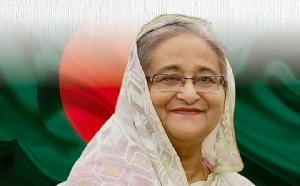
Author: Sheikh Hasina - Politician, President of the Awami League, Five-time elected Prime Minister of Bangladesh,
and daughter of Bangabandhu Sheikh Mujibur Rahman.
 শুক্রবার, ২৫ সেপ্টেম্বর ২০২৬,





 দ্রুত উন্নয়নের দিকে ধাবিত দেশটি উল্টো দ্রুত গতিতে ধ্বংসের দিকে যাচ্ছে
 স্বাধীনতার ইতিহাসে অবিস্মরণীয় এক মহীয়সী নারী: বেগম ফজিলাতুন্নেছা মুজিব
 Sheikh Fazilatunnesa Mujib
 The Awami League was born through its own efforts, created Bangladesh, and transformed a poor nation into a developing country-such a party cannot remain banned.
  আওয়ামী লীগ নিজে জন্মেছে, বাংলাদেশকে জন্ম দিয়েছে, হতদরিদ্র দেশকে উন্নয়নশীল দেশে রূপান্তরিত করেছে-সে আওয়ামী লীগ নিষিদ্ধ থাকতে পারে না।